
Liverpool is a city of character: the cradle of musical revolutions, a global-scale port, and an arena for political protests. Hidden behind this façade is often one of the key positions in city governance: the Deputy Mayor. Who is this person? The second-in-command to the Mayor? Or simply a ‘spare player’ in case of emergency? In Liverpool’s case, the situation is much more interesting – and that is why we are discussing it on liverpoolyes.com.
In Liverpool, the role of Deputy Mayor has often become a pivot point during moments of political turbulence, and sometimes the sole source of stability. How has the Deputy Mayor’s role changed over recent decades, why did it become prominent specifically in the 21st century, and what is its status now that the governing model itself has been reset?
How the Position of Deputy Mayor of Liverpool Emerged
Before 2012, Liverpool operated under a system of local government where the real power belonged to the Council Leader, and the position of Mayor was largely ceremonial – the so-called Lord Mayor. This centuries-old title primarily had a representative function: opening events, meeting delegations, and leading festive processions. Executive decisions were made by the Council, and the de facto city head was the majority leader.
Everything changed in May 2012 when Liverpool adopted the directly elected Mayor model – a position with a direct mandate from the voters. With the new structure came a new executive team, including the Deputy Mayor. This was no longer just a technical post; rather, it was a political figure close to the centre of decision-making.
The first directly elected Mayor was Joe Anderson, who formed an executive cabinet where the Deputy was not just an advisor but also oversaw specific policy areas. Deputies could supervise social services, culture, urban planning, or transport – depending on the distribution of portfolios within the team. It was this structure that allowed the position to move beyond mere administrative protocol.
Test of Strength: When the Deputy Becomes the Principal
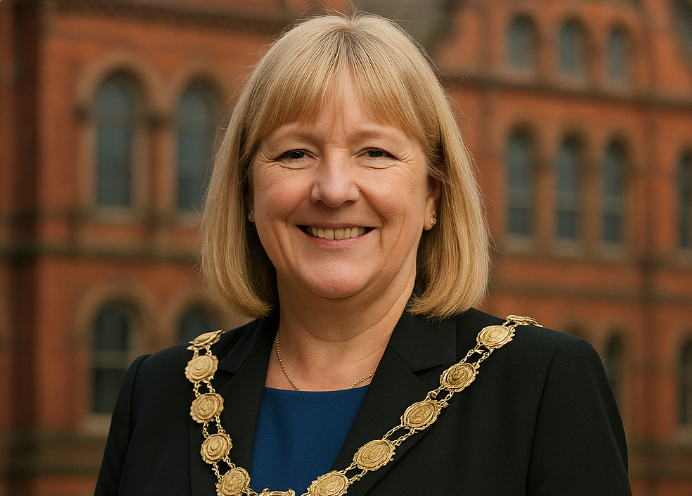
The Deputy Mayor’s role generally does not involve being in the spotlight. But Liverpool’s politics are a landscape of instabilities, and it was under these conditions that the Deputy Mayor’s position revealed its true magnitude. The most striking example was the period from December 2020 to May 2021, when the then-Mayor, Joe Anderson, was temporarily suspended due to a corruption investigation. During this time, the Mayor’s duties passed to his deputy, Wendy Simon.

This woman, previously inconspicuous outside municipal circles, found herself in the role of the city’s de facto head during one of its most challenging periods. The COVID-19 pandemic, tension within the City Council, and reputational damage – all landed on the Deputy Mayor’s shoulders. She became the public figure who communicated with citizens, the media, and the government.
Simon’s role was particularly notable in the fields of culture and the visitor economy – a sector that generated over £3.5 billion annually in Liverpool before the pandemic and employed over 28,000 people. This was the area Wendy was responsible for in previous years, and it remained a priority under her temporary leadership. In a moment of crisis, this woman became the person who kept things steady at the helm.
This period forced many to consider: should the Deputy position not be transformed into a separate elected role, with a clearly defined mandate and public scrutiny? In a city where political storms are common, it is crucial to have a transparent and understandable system of governance. One that even a child could explain: who is responsible for what and how decisions are made. At the same time, this case showed that the Deputy Mayor in Liverpool is not a reserve player, but a leader ready to take the field at the most difficult moment.
Abolition of the Mayoralty and the Deputy’s Transformation

In 2023, Liverpool took a radical step: it abandoned the directly elected Mayor model. The city returned to the traditional governance system: executive power is once again concentrated in the hands of the Leader of the City Council, and the role of the Lord Mayor remains purely ceremonial. This change was the culmination of several years of scandals, distrust, and criticism directed at the previous system, where power was concentrated in the hands of one elected leader.
Along with the Mayor, the established position of Deputy Mayor as part of the executive vertical disappeared. In the new model, this function has not been retained in the form of a separate office – the Deputy Mayor no longer features as a clear managerial unit with a portfolio, budget, or public obligations. In fact, this role is either distributed among the Council Leader’s deputies or dissolved into the administrative hierarchy without a distinct identity.
This raises a new wave of discussion: did city democracy benefit from this transformation, or did it, conversely, lose one of its important balancing points? The role of Deputy Mayor, as Wendy Simon’s experience demonstrated, could be a safeguard in a moment of political crisis, a communication channel with the community, and the face of specific strategic areas – from culture to infrastructure. Now, this element is missing from the structure.
Thus, the history of the Deputy Mayor’s position in Liverpool is a litmus test of how the city copes with challenges, delegates trust, and reshapes its governance architecture, just as it once reshaped world music. And it is quite possible that this role will have to be re-evaluated many more times.