
The most devastating thing that can happen to any nation is war. It brings death and sorrow to millions of families, reduces cities to rubble, and has a crippling effect on the economy. Despite this tragic history, humanity has fought, and continues to fight, military conflicts. In this article for liverpoolyes.com, we look at how the First World War impacted the life of a strategically vital and major industrial city like Liverpool.
The City Before the War
By the start of the 20th century, Liverpool was a magnificent, thriving city, attracting people as a place of immense opportunity. Splendid architecture, a booming economy, and an abundance of jobs defined Liverpool in 1914.
The city was involved in every aspect of UK industry and trade. The automotive, shipbuilding, and pharmaceutical sectors, along with international and domestic trade and engineering, were all rapidly developing. Crucially, not only men but also many women were employed – they worked in medicine, education, and tailoring. Women also had the opportunity to work as domestic servants for wealthy families, take in laundry, or work as nannies. This high level of employment meant a significant amount of money was circulating, benefiting Liverpool’s economy.
A Key Strategic Location
From the outset of the First World War, it was clear that Liverpool’s most vital asset for the upcoming conflict was its status as a deep-water port with numerous docks. The port was constantly developing and expanding, resulting in it having the largest number of docks on any single coastline in the world at that time.
During the war, a significant proportion of military supplies passed through the Port of Liverpool. In addition, ships carrying food and various other goods arrived here. This meant Liverpool was not just an industrial powerhouse but also one of the UK’s key naval bases.
Mobilisation and Recruitment
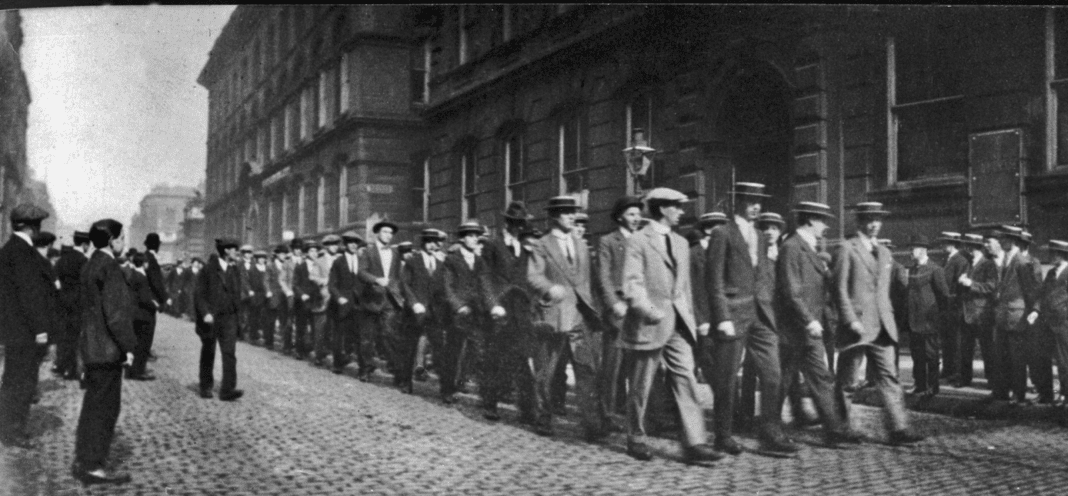
In late summer 1914, mobilisation was announced in Liverpool, and men rushed to enlist. Lord Derby, who was calling for volunteers, was astonished by the city’s immediate and enthusiastic response. Recruitment began on August 31st, and a queue of men eager to join the British armed forces formed at St George’s Hall in the city centre.
By 10 a.m., over 1,000 men had signed up, which was enough to form the battalion Derby had promised Lord Kitchener, yet many more volunteers were still waiting. Within a week, a further 3,000 people had joined the army. Given the city’s maritime status, the largest number of men were called up to serve in the Royal Navy.
Life Goes On
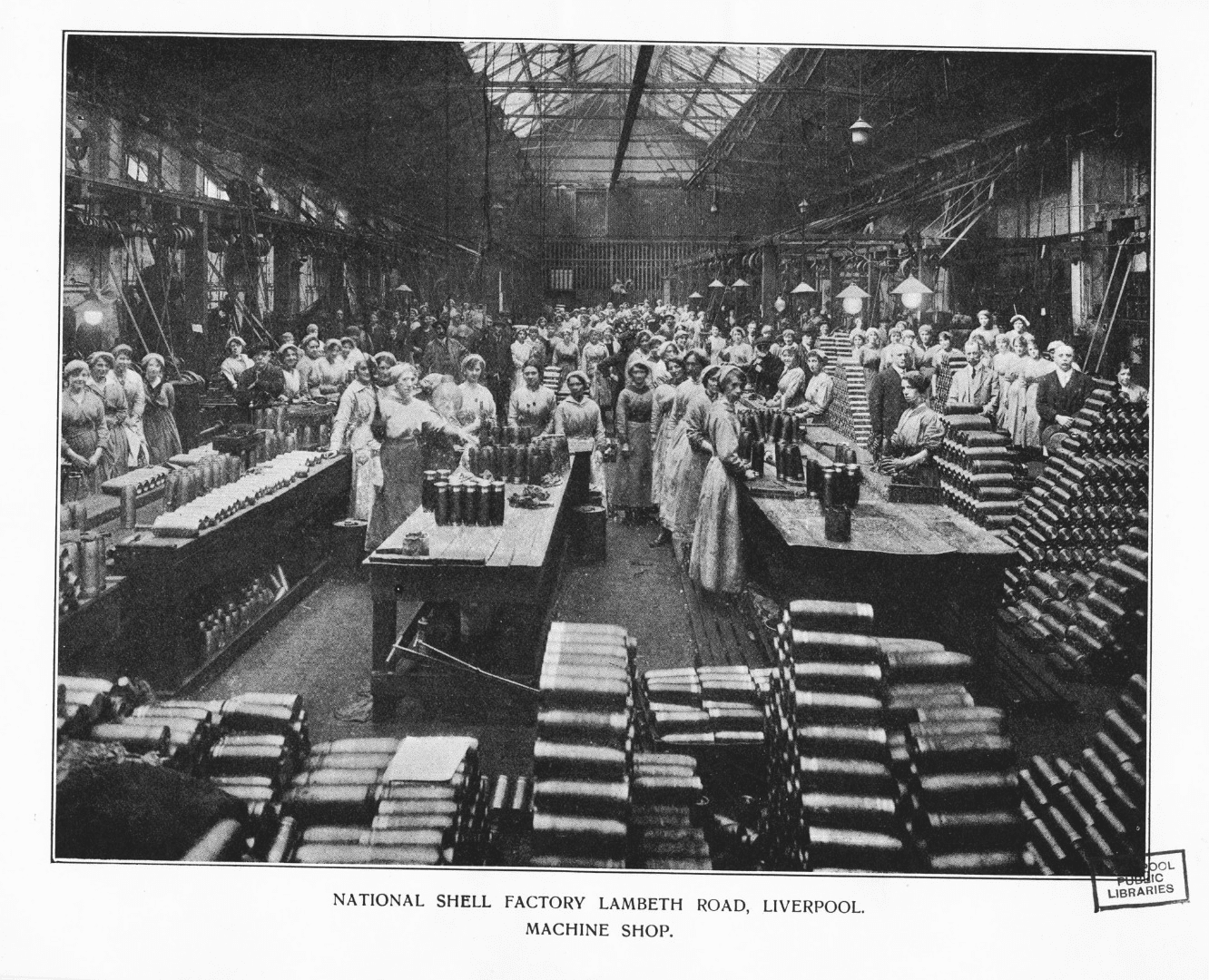
Despite the escalating conflict and ongoing hostilities, city life continued. The mobilisation of working-age men created a pressing need to draw women into the workforce. They were now employed not only in their usual fields but also in factories, including those producing munitions (by 1918, over 900,000 women worked here nationally), in postal and transport services, government departments, trade, and even the police.
These days, no one is surprised that women work alongside men, but for the early 20th century, this was a real revolution, as before the war, the female population was largely occupied with domestic duties. Women became more independent, and this played a crucial role in the social changes that followed the war.
Social and Political Transformations
It’s important to note that many changes were gradual, especially those concerning women’s rights. For instance, in 1918, women over 30 were granted the right to vote. It wasn’t until 1928 that this right was extended to all women aged 21 and over.
The war necessitated increased industrial productivity to support the war effort, leading to excellent organisation and greater strength for Liverpool’s working class. Residents returning from the war were united by the common goal of industrial reconstruction, while the population as a whole, having endured the horrors of the conflict, expected and demanded social reforms on a scale previously unseen.
These changes began with the creation of a large number of trade unions in Liverpool, which defended the rights of the working class. By early 1920, over 60% of the city’s employed residents—both men and women—were members.
The Housing Act was also signed in 1919, the adoption of which initiated active council housing construction across Liverpool. Hundreds of families moved from the central city slums to new suburban homes. Intensive building continued in the following decades, including after the Second World War.
Hundreds of thousands of people from Liverpool and the surrounding regions participated in the First World War, which claimed millions of lives across Europe. Around 13,000 Liverpool residents died during the 1914–1918 conflict. Their patriotism, heroism, and courage will always be remembered at the city’s themed exhibitions, talks, and memorial events. While their lives cannot be brought back, they undeniably played a part in shaping the course of history.