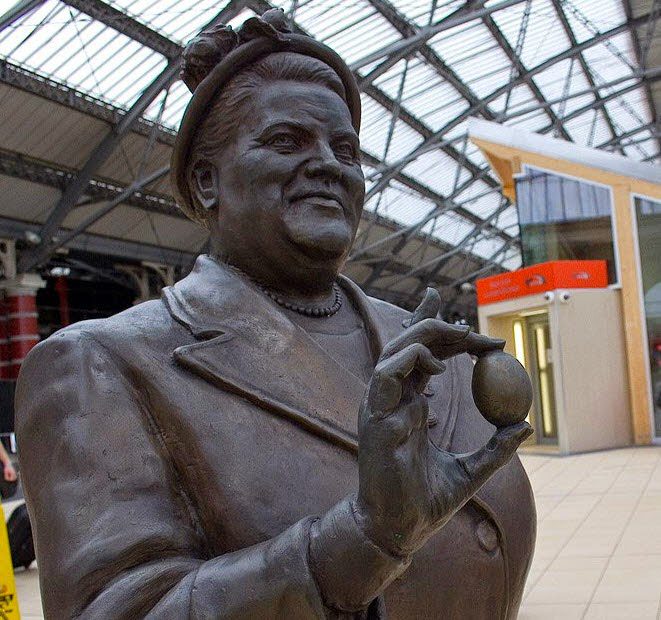

In the modern world, a woman in politics is no longer a surprise. It’s the norm in our information society. Yet, in the last century, female politicians were often met with suspicion and distrust. After all, some men believed a woman’s place wasn’t in politics. Today, we’re talking about the remarkable politician Elizabeth Braddock, who served as a Member of Parliament (MP). She won the love of her constituents through her campaigns focused on housing, healthcare, and other social issues. You can read more about the life and political career of this local Liverpudlian on the pages of liverpoolyes.com.
Childhood and Early Life
Elizabeth Braddock was born in Liverpool in 1899. Her father worked as a bookbinder, while her mother was a passionate activist. It was from her mother that Elizabeth inherited her strong desire for change and justice. The reality was that late 19th-century Liverpool was far from an appealing place. Poverty was widespread, and the city had the highest rate of infant mortality in the country. Elizabeth’s mother, Mary, organised trade unions and began fighting against the city’s appalling conditions. The young Elizabeth saw her mother’s fierce commitment to justice and sought to emulate her.
This commitment led Elizabeth to attend not just a regular school, but also a socialist Sunday school. By the age of eleven, she had left the Sunday school and joined the youth section of the Independent Labour Party (ILP). Her mother also continued her political work, organising the Warehouse Workers’ Union. Elizabeth often helped her. Importantly, the girl was present during the dispersal of a protest rally on 13 August 1911. The riots resulted in numerous injuries and two deaths. This day went down in Liverpool’s history as “Bloody Sunday.”

Professional Career
Elizabeth started working quite young, leaving school in 1913. She was paid five shillings a week to fill seed packets. Later, Elizabeth took a job at the “Walton Road Co-operative” shop. Her mother insisted that her daughter join the Shop Workers’ Union. Elizabeth also started attending classes with the Workers’ Educational Association and the Plebs’ League. Incidentally, there were three Elizabeths among her fellow students, and to avoid confusion, Braddock adopted the name Bessie. A name she would keep for the rest of her life.
In 1918, this Liverpudlian took up a clerical post in the Warehouse Workers’ Union. It was during this period that she met Jack Braddock, who also held left-wing beliefs. A relationship blossomed between them.
Political Career
In 1920, Bessie became disillusioned with the ILP and, together with Jack, joined the newly formed Communist Party of Great Britain (CPGB). Two years later, Jack and Bessie married. At that time, Elizabeth was working for the trade unions, while her husband was volunteering for the party.
The couple left the CPGB but continued their socialist activism in Liverpool. In 1926, the Braddocks joined the Fairfield Ward of the Liverpool Labour Party. Just three years later, Jack became a Labour councillor, and Bessie soon followed her husband into the council.
Bessie was a member of the Port Sanitary and Hospitals Committee. She discovered that the hospitals were poorly equipped, lacked proper ventilation, and offered substandard living conditions.
Consequently, the female politician played a key role in reforming, reorganising, and modernising many of Liverpool’s healthcare facilities. She paid particular attention to those institutions providing services for mothers and children.
From 1934, Elizabeth Braddock chaired the Maternity and Child Welfare Sub-Committee.
Throughout her life, this local champion always championed the rights of working people and fought for social justice. On one occasion, the police even removed her from the council chamber. This happened because she called the Chairman of the Housing Committee a liar and refused to withdraw her remark. Bessie also famously used a megaphone during a council meeting.
In 1936, Bessie was selected as the Labour Party candidate for Liverpool Exchange.
The Second World War and Post-War Activity
With the start of the Second World War, Bessie joined ‘G’ Division of the Liverpool Ambulance Service. She became an ambulance driver, operating during all 68 major air raids on the city. This was incredibly dangerous, as many drivers lost their lives while on duty. Remarkably, Bessie continued to work as a driver until the end of the war.
After the war, Bessie became the honorary President of the Liverpool Trades Council and the Labour Party. She also secured her place as a Member of Parliament. This local figure was a strong supporter of the creation of the National Health Service (NHS) in 1948.
In 1947, she was elected to the Labour Party’s National Executive Committee. Bessie later served on the Royal Commission on Mental Health, which ultimately led to the passing of the Mental Health Act 1959.
Throughout her life, Bessie strived for justice and better living conditions for the people of Liverpool. However, as the years passed, her own health began to fail. In 1964, Labour won the general election, but Bessie declined a position due to her deteriorating health. Elizabeth Braddock passed away in 1970, but her active political career was remembered long after her death.