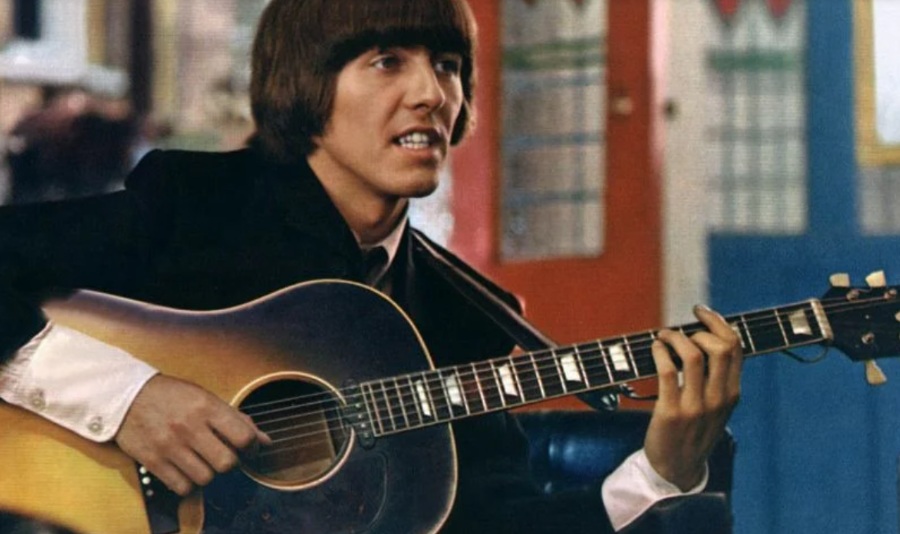

Famous Liverpudlians rarely shy away from political issues and social struggles, states the website liverpoolyes.com. They consider it their duty to foster peace and harmony – at least as they understand it. This was true of John Lennon, known for his fight for peace and social equality, and it turned out to be true for the “quiet Beatle,” George Harrison, too. Here are some of the most fascinating details about the politics he championed.
What Politics Meant to George Harrison
George Harrison held complex and multifaceted political views that evolved throughout his life. He wasn’t an active participant in political debates, but he supported a range of humanitarian, environmental, and spiritual initiatives. It’s the spiritual component that can be considered paramount.
In 1992, Harrison played his first UK concert in 23 years in support of the Natural Law Party – a political force that combined ideas of harmony with nature, meditation, and spiritual principles in state governance. George supported this party more out of his beliefs and spiritual convictions. Politics in the classical sense seems to have little to do with it here.

Nevertheless, Harrison was not neutral on political matters, as he is known for his criticism of the government and tax policy (the song Taxman), as well as calls for independent thinking (Think For Yourself). George was actively involved in charity: he organised the first large-scale charity concert in rock history – the Concert for Bangladesh (1971), which raised millions of dollars for the victims of a humanitarian disaster. From the 1980s, Harrison supported Greenpeace, CND, and Friends of the Earth, funded environmental initiatives, and spoke out against nuclear energy.
Now, let’s summarise slightly. George Harrison’s political activity combined humanitarian, environmental, and spiritual values with moderate criticism of authority, and his influence on society manifested more through philanthropy and art than through traditional political struggle. However, if we dig deeper into the musician’s life story, some interesting facts emerge.
Supporting Natural Law
George Harrison supported the Natural Law Party and funded their campaigns due to his deep interest in spirituality, harmony with nature, and the ideas of meditation that formed the core philosophy of this political force. The Natural Law Party promoted governing the state based on natural laws, harmony, and the application of transcendental meditation techniques to improve social life, which aligned with Harrison’s personal beliefs.
For Harrison, supporting this party was a manifestation of his desire to disseminate ideas of peace, health, and environmental consciousness through political activity, rather than conventional political activism. Harrison believed that such approaches could help resolve social problems and improve the quality of life, combining spirituality with practical methods. Thus, through his support for the Natural Law Party, Harrison wanted to say: I believe in the transformation of society through spiritual and natural principles.
When George Started Thinking for Himself

By the mid-60s, George Harrison was no longer the “quiet Beatle” people were used to seeing. After the American triumph and his songwriting contributions to the album Help!, something clicked for him. The recognition of John’s role in the band effectively gave him the glasses through which he saw the government with its long arms and even longer tax demands.
The British tax system of the 1960s truly could tarnish the reputation of even those bathed in glory. And although George would respond most sharply to this in Taxman, the first warning bell rang earlier – in Think For Yourself. In his book I Me Mine, Harrison recalled that he no longer remembered who the song was specifically about – “probably the government.” Such a tone of recollection doesn’t diminish the essence: we’re witnessing the beginning of his anti-authoritarian voice.
During this period, George began to discover something more than show business. He took LSD, read, pondered, and most importantly – stopped accepting the imposed worldview. Instead of repeating what society dictated, the outstanding musician from Liverpool started to question. And in this lies his most powerful political gesture.
“Think For Yourself” – A Hybrid of Fury and Irony

Think For Yourself isn’t yet an angry protest, but it’s no longer polite observation either. It’s an intermediate state where the artist isn’t screaming yet, but is no longer silent. It’s the moment when a young man, armed with a guitar, doesn’t accept the imposed “should” from above, but instead asks: “But why, exactly?”
LSD played the role of a catalyst here. Not as a drug-ballast, but as an instrument of doubt. It is doubt – in society, in institutions, in party lines – that forces a person to step out of the role of an extra. Harrison increasingly became the author of his own script each day, and his songs are pages of this process.
Even the sound of the songs changed. The Beatles became less “sunny” and increasingly sharp, predatory. In Think For Yourself, one can feel how protest seeps into the notes, how irony flows around the harmonies. This is no accident – it’s the beginning of the band’s sonic politics, where every effect means something.
Fuzz Box Against the System
The sound of Think For Yourself noticeably changes thanks to a decision unusual for the time: Paul McCartney routes his bass through a fuzz box. The result is a distorted, “dirty” sound that seems to mirror the song’s emotions. And here, technology becomes a language. A language of defiance.
George himself recalled hearing this effect for the first time in the song Zip-A-Dee-Doo-Dah, when Phil Spector accidentally overloaded a microphone and decided not to correct the error. That’s how fuzz was born – the sound of an accident accepted as truth. And The Beatles, always sensitive to new things, made it part of their own arsenal.
It’s important that this sound appeared precisely here, in a song about thinking. Because it’s like turning inside out – beauty isn’t in cleanliness, but in roughness. Music becomes a way of saying: “We don’t like how things are organised.” No slogans – just sound.
The mid-1960s became a period when sound in music ceased to be merely a background and became an instrument of stance. The use of distorted bass in Think For Yourself creates an effect of disturbance. It hums, crackles, goes against everything clean and smooth. And this suits the message: to think for yourself means to break what you’ve been given ready-made.
Therefore, the sound in this song is also a mirror of George at that time. Not a sharp rebel, not an aggressor. But someone who quietly, yet persistently asks uncomfortable questions. And even when answers aren’t immediately available – the very fact of such a question changes a lot.
George Harrison’s Political Stance: Between Scepticism and Spirituality
George Harrison was not an active participant in political life in the traditional sense. In his autobiography I Me Mine, he wrote:
“I never voted for anyone in my life. I don’t understand why you have to be left or right.”
The Liverpudlian musician compared political divisions to disagreements in mysticism, which also irritated him. Also, despite supporting the Natural Law Party, which was based on the principles of transcendental meditation, Harrison declined an offer to run for parliament for this political association. Reasons? He didn’t want to spoil his karma for four years.
Humanitarian Activities and Social Initiatives

Harrison was actively involved in humanitarian work. In 1971, he organised a performance in support of Bangladesh, which became the first major charity concert in pop music. This event raised significant funds to help those affected by war and natural disasters.
In 1980, George joined Greenpeace and CND (Campaign for Nuclear Disarmament), and also protested against the use of nuclear energy with Friends of the Earth in London. He also funded an environmental magazine called Vole, founded by Monty Python member, Terry Jones.