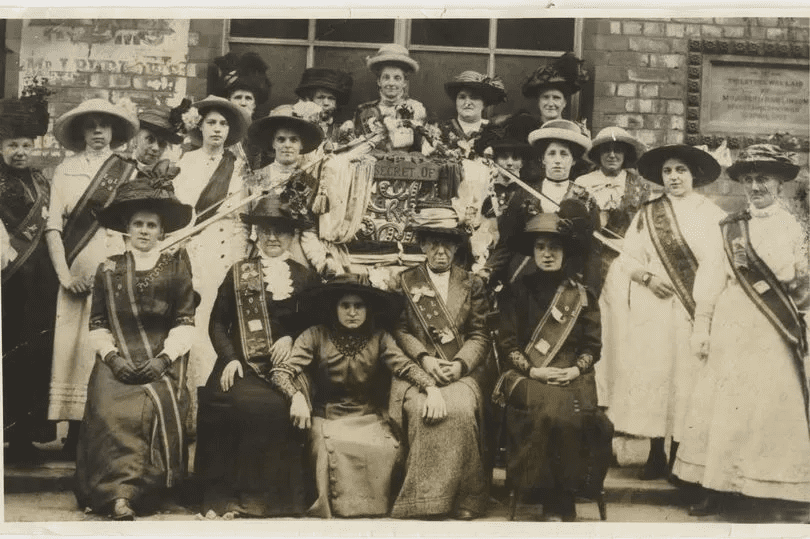

The Liverpool Protestant Party (LPP) was a 20th-century political force that has since disbanded. Although often considered a minor party, it held a degree of influence at a certain point in history. Active in the city of Liverpool, the party was formed by the Orange Order as an alternative to the Conservatives, with whom many were dissatisfied. What did the LPP achieve, and how influential was it? What ultimately became of it? Find out the answers in this article from liverpoolyes.
Background
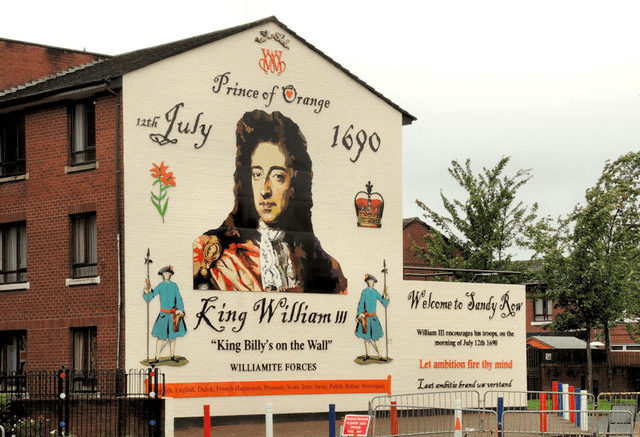
The Orange Order, a Protestant fraternity, was established in Northern Ireland in the late 18th century. It was founded to protect the interests of the Protestant community within Irish society, particularly in its relations with Catholics. The organisation is named after William of Orange, the King of England, Scotland, and Ireland, who defeated the Catholic King James II at the Battle of the Boyne in 1690. The colour orange subsequently became a symbol of Protestant ascendancy.
A similar organisation was active in Liverpool. Initially, it supported the Conservatives, but dissatisfaction with the party grew over time, driven by several factors:
- The Conservatives’ use of their political power in Parliament to block the extension of factory inspections to convent laundries.
- The Education Act of 1902, which allowed Catholic schools to be funded from the rates—a move Protestants considered unjust.
- The failure to pass a new Church Discipline Bill or amend the existing one. Protestants were seeking more effective measures against extreme ritualism within the Church of England, which involved practices they considered overly formal, complex, or contrary to their doctrines.
The late 19th and early 20th centuries saw a large wave of Irish migration to Liverpool, predominantly Catholic. Consequently, the proportion of Roman Catholics in the city increased relative to Protestants. The Liverpool Protestant Party opposed the construction of a cathedral for the Catholic community. One of the prominent activists for the Protestant cause was John Kensit, leader of the Protestant Truth Society, who stood for election to the House of Commons in Brighton in 1898.
History of the Party
Liverpool was home to George Wise, a Protestant leader and a man of strong principles. He was briefly imprisoned for refusing to be bound over to keep the peace following disturbances at a local meeting. Upon his release, Wise was determined to secure Protestant representation on the City Council. This notable pastor had the backing of a large number of members from the Orange Order. Although the ‘Orangemen’ typically supported the Conservatives, 1903 was different. They cast their votes for the newly formed Liverpool Protestant Party (LPP), led by Wise.
1903–1919
In its first election, the party aimed to win four seats. It ultimately secured three, including one in the Kirkdale ward. It also gained representation on the West Derby Board of Guardians, which managed healthcare and poor relief in the north and east of the city. Before the First World War, the party grew closer to the Conservatives, collaborating in the campaign against the Irish Home Rule Bill. However, Archibald Salvidge, the city’s Conservative leader, remained opposed to independent Protestant representation.
1920s–1930s
The Conservative Party’s support for the creation of the Irish Free State led to a new wave of discontent among radical Protestants. In Liverpool, this manifested as a loss of membership for the Conservative Workingmen’s Association. The Liverpool Protestant Party believed the establishment of the Irish Free State was merely a stepping stone towards an all-Ireland republic. During this period, the National Protestant Electoral Federation (NPEF) was formed with four main objectives:
- To promote the study of Protestantism.
- To preserve the Protestant succession to the throne.
- To support the return of staunch Protestants, regardless of party affiliation, to represent the religious community in public bodies.
- To protect the interests of Protestant workers in trade unions.
In Liverpool, the NPEF’s policies were put into practice during the 1922 elections for the Board of Guardians. The Federation backed candidates from the Protestant Party, as well as any other candidates who simply used the word “Protestant” in their political title. As a result, two members of the Protestant Party and two candidates from a group named “Protestant & Unionist” were elected.
1930–1945
The Local Government Act of 1929 abolished the Boards of Guardians, transferring their powers to local authorities. Liverpool Corporation took control of three committees. This led to a rationalisation of various hospitals and other institutions, which involved replacing outdated or redundant facilities, merging some establishments, and reallocating resources to optimise their operations. Consequently, the premises of the Liverpool Board of Guardians became redundant. The City Council decided to sell the site to the Catholic Church, which planned to build a cathedral there. The deal was initially blocked by the Protestants, but the Conservatives ultimately helped the sale go through.
This prompted the Protestant Party to contest the City Council elections, which it did in November 1930. Only its leader, Harry Dixon Longbottom, was successful (winning in St Domingo), but in several other wards, the party split the Conservative vote, allowing Labour to win.
The party’s platform included resisting Labour’s socialist policies and restricting immigration to Great Britain from Roman Catholic areas of Ireland. While primarily focused on local government, the party also put forward Reverend Longbottom as a parliamentary candidate for the Kirkdale constituency from 1931 to 1945. In 1931, he managed to secure a quarter of the votes.
1945–1974
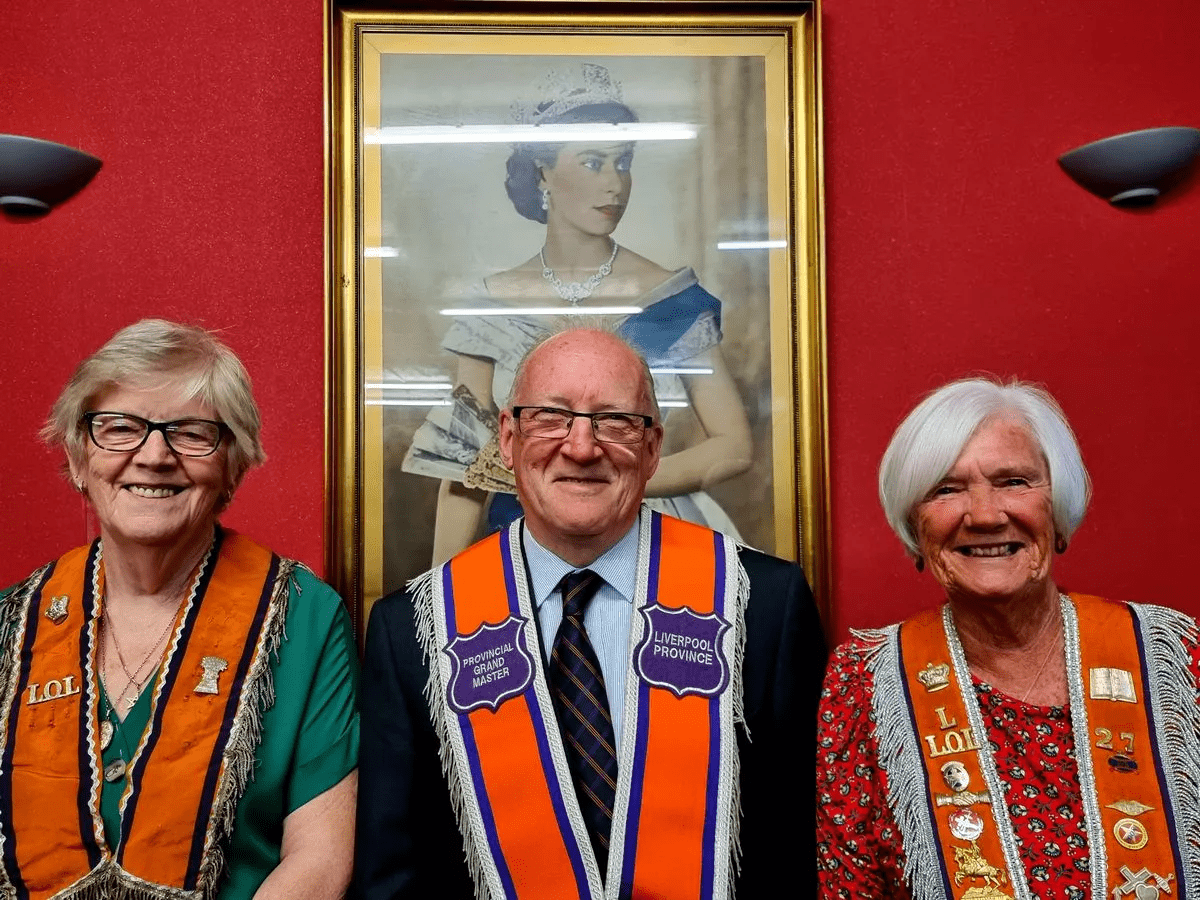
In the entire period between 1945 and 1970, there was only one year (1963) when the Protestant Party was not the third-largest party on the council. In the St Domingo and Netherfield wards in the north of the city, they were so dominant that the Conservatives did not even contest them. Furthermore, the two political forces found common ground on many issues and often voted together.
The party also consistently held at least one council seat from 1945 to 1957. It won its last seat in 1973, by which time its activity was already declining. The “Orange vote” gradually lost its influence, and the LPP found it increasingly difficult to continue. In 1974, the Protestant Party was officially dissolved, with most of its members joining the Conservatives.
Legacy
The “Orange vote” in Liverpool did not disappear overnight. The Democratic Unionist Party (DUP) attempted to establish a branch in the city, an effort in which former members of the Liverpool Protestant Party participated.
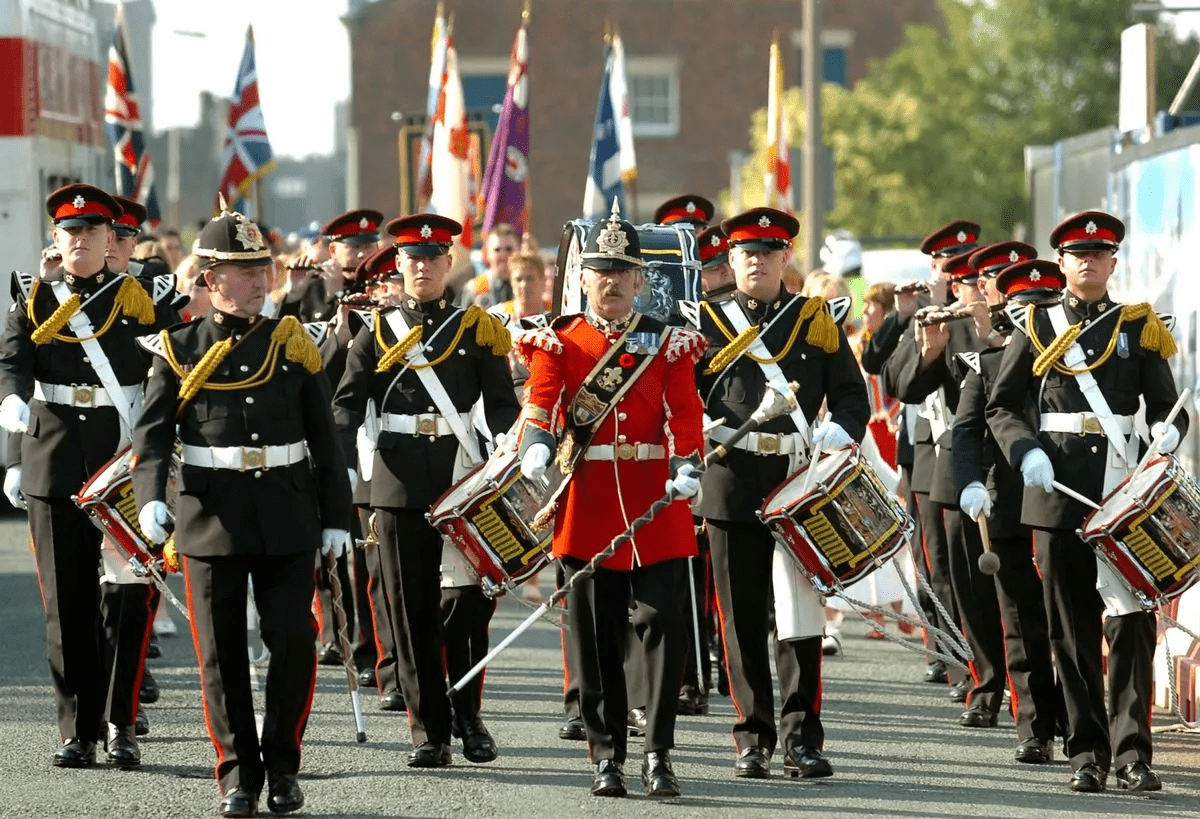
It is worth noting that historians have mixed views on the activities of the Orange Order and the Protestant Party, as their marches and debates sometimes triggered outbreaks of violence and clashes in Northern Ireland. This political force considered Catholics its main “enemy,” with the core ideological disputes rooted in religious doctrine. While fights between religious opponents still occurred in the 20th century, they became less frequent, and confrontations now rarely escalate beyond mutual insults.