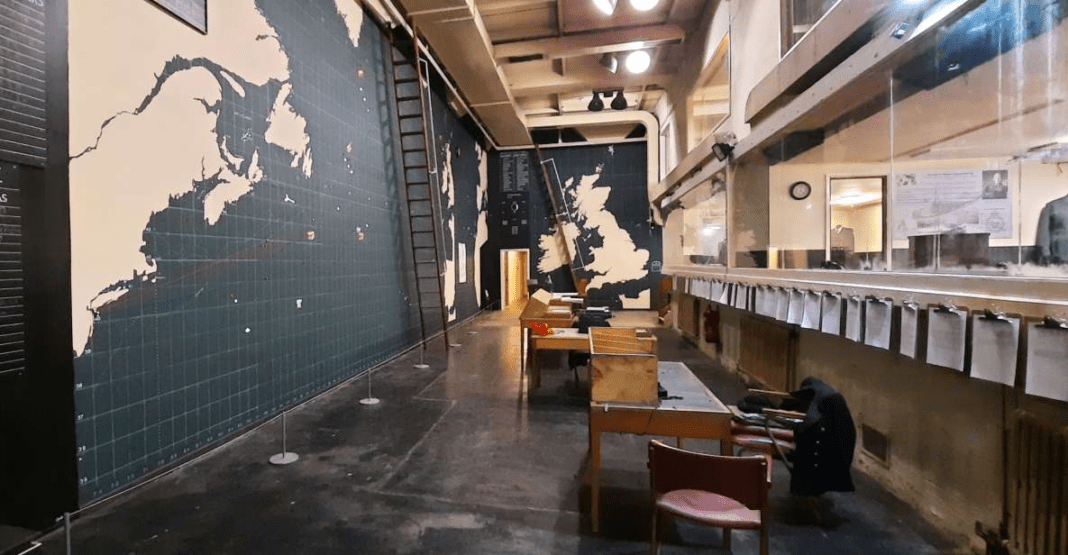

A top-secret underground bunker from the Second World War in Liverpool played a pivotal role in the Battle of the Atlantic. Uncover the secrets of the British Armed Forces who worked tirelessly to protect Britain’s vital sea supply routes and help the Allies secure victory. Our article on liverpoolyes.com has the full story.
Key Information
We are talking about the Western Approaches Command, an incredible secret bunker located deep underground on Rumford Street in Liverpool. It has been preserved and is now open for tours. These subterranean chambers were instrumental during the Battle of the Atlantic. The bunker guarded the secrets of the British Armed Forces, who were dedicated to ensuring that the crucial sea lanes for the Allies remained secure.
Inside Western Approaches, which now functions as a museum, you can see the original documents and tools the forces used to track enemy movements. You can also view a telephone, preserved from the war era, which was used to maintain contact with the War Cabinet in London.
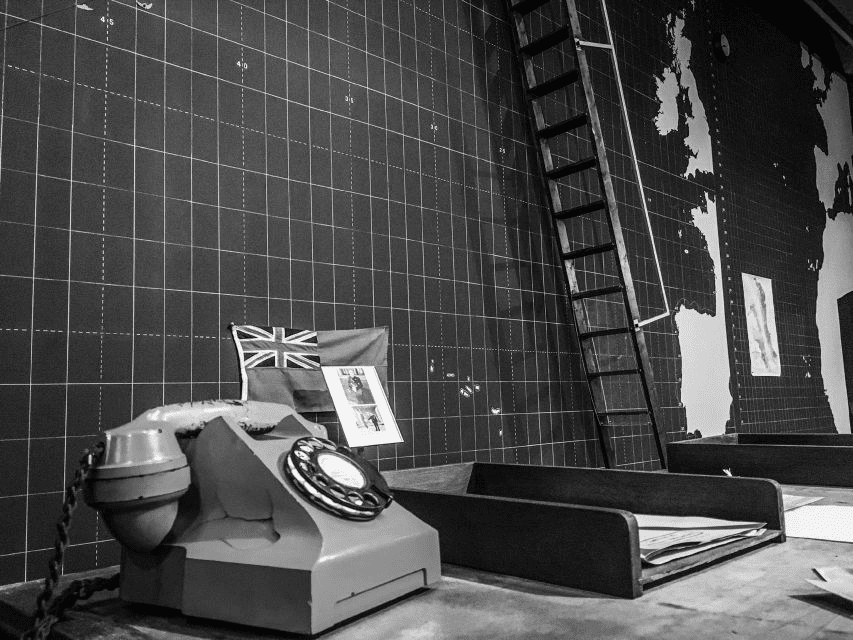
The Map Room served as a kind of nerve centre for the Battle of the Atlantic. It was here that convoy routes and vital shipping lanes were monitored. Absolute precision was essential when plotting the enemy’s location on the large wall map; without it, destroying the enemy fleet would have been impossible.
The area of the Atlantic Ocean to the west of the British Isles is known as the Western Approaches. Liverpool was home to the command centre for this area, meaning the city held a highly important strategic role in the Second World War. All these wartime secrets are still held within the museum. While once upon a time, entering the building required signing the Official Secrets Act, today the entrance is open to anyone wishing to explore Liverpool’s military history. The Operations Room remains exactly as it was in 1945.
Fascinating Bunker Facts
The bunker was constructed beneath Derby House, a building known locally as ‘The Citadel’ or ‘The Fortress’ due to its impressive reinforced concrete basement defences. It was built to be bomb and gas-proof, featuring a 7-foot concrete roof and 3-foot concrete walls. It contained 100 rooms and covered an area of 55,000 square feet.
Over 300 people worked in the bunker, and they were able to sleep on-site during their shifts. The location was equipped with sleeping quarters, offices, and secret research rooms.
The first room a visitor enters is known as the “Road to War Room.” It highlights the events following the First World War that led to the Second, and also provides information about the relocation of the Western Approaches headquarters from Plymouth to Liverpool.
The Operations Room is where the cabins for the RAF and the Royal Navy were located, each accessed by three steps. A staircase leading to the next floor is situated at the back of the naval room. To the right of that is the security watchpoint and a writing desk complete with a key cabinet.
The Royal Navy, Marines, and Air Force all worked together in the bunker. They monitored enemy convoys and submarines, which threatened to cripple Britain early in the war. When numerous enemy subs grouped together for a ‘hunt’, they were chillingly dubbed wolf packs.
The work carried out in the bunker played a crucial part in the Battle of the Atlantic. Thanks in part to their efforts, the US and Canada could successfully import weapons into the UK, which was absolutely vital. When Germany began to face defeat in 1944, a great deal of the credit went to those operating within the Liverpool bunker. It was here that the submarine ‘wolf packs’ were decisively stopped.
Top-secret information was transmitted from the Western Approaches Cypher Room to Bletchley Park. This was the English country house in Milton Keynes that served as the principal Allied codebreaking centre during the Second World War.