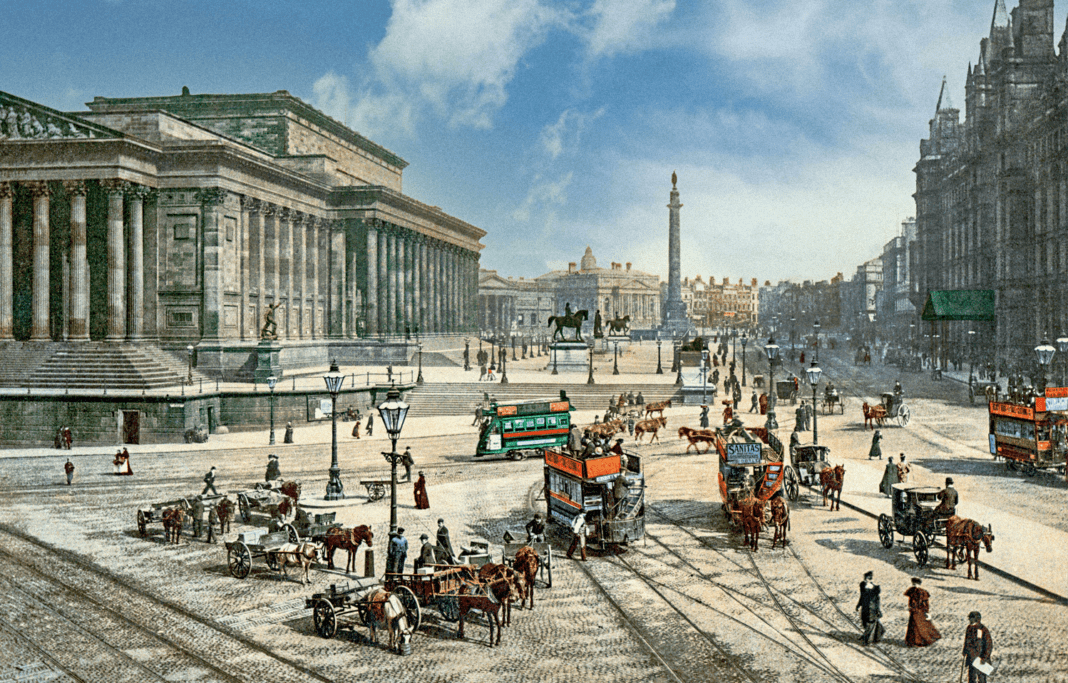

In the 16th and 17th centuries, Liverpool was a small fishing settlement with a population of only around 500. The town sustained itself through trade with Ireland, but business connections were gradually beginning to form. The Merseyside town experienced a boom in the 18th and 19th centuries, triggered by several key political events. Read more on liverpoolyes.
Growth Fuelled by the Slave Trade
A pivotal moment occurred at the end of the 17th century when William Clayton, a local sugar and tobacco merchant, dispatched his ship, the Liverpool Merchant, to Africa. There, Captain William Webster acquired not only the usual goods but also something entirely different. This ‘cargo’ was black, it moved, breathed, and spoke. We are, of course, talking about enslaved Black people – 220 individuals taken from Africa. They were sold in Barbados, and the Liverpool Merchant became the first ship from the city to be used in the slave trade.
The slave trade subsequently grew on a massive scale, especially after the UK’s first commercial wet dock was built in Liverpool in 1715. Over the following years, the number of slave ships in the city surged, soon reaching 15. Between 1793 and 1807, Liverpool became the undisputed leader in the slave trade, accounting for 84.7% of all voyages carrying ‘human cargo’. To this day, many of Liverpool’s street names bear the names of the slave traders from that era.
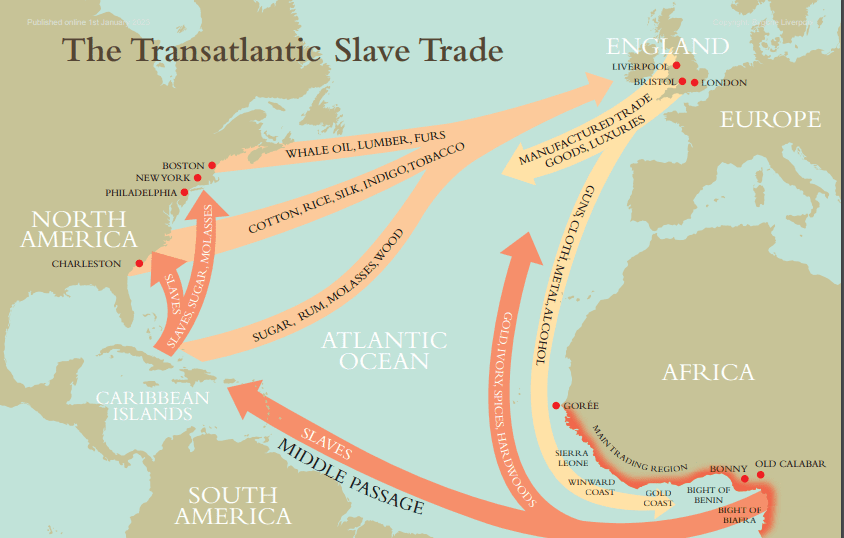
Of course, other goods were traded – tobacco, tea, sugar, silk, cotton, and ivory. But enslaved people were particularly valuable. Historians note that by the early 19th century, Liverpool had become the leading port of the British Empire, though its growth was largely driven by the enslavement of people from Africa.
The Influence of Merchants and the Press
Liverpool’s merchants were a force in their own right, keeping a close watch on how MPs and political candidates either promoted trade or protected their commercial interests. The passionate local press wielded a similar level of influence. These groups became a kind of shadow power, whose opinions could not be ignored. To do so could mean getting a bullet to the heart, as was the fate of Prime Minister Spencer Perceval, who was assassinated by a Liverpool merchant after failing to get what he wanted from the government of the day.
When local entrepreneurs had political ambitions of their own, they often dominated the local parties. However, they rarely achieved more in Liverpool than becoming token candidates for a comfortable position in power. Consequently, they had to look for opportunities to secure influential posts elsewhere, in other towns and cities.
The Core Political Issues
With this context, it becomes easier to understand the main political events in Liverpool during that period.
The Anti-Slavery Movement
Not everyone accepted the practice of treating people as human commodities. Opponents of slavery united to form the abolitionist movement. This forced those in power to decide whether it was better to develop the city through inhumane methods or to act nobly, thereby hindering the financial prosperity of the merchants. Both viewpoints had their supporters and detractors.
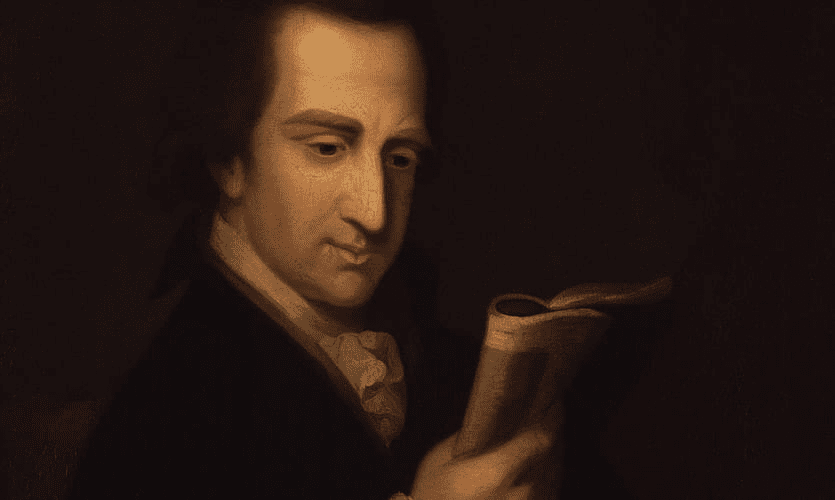
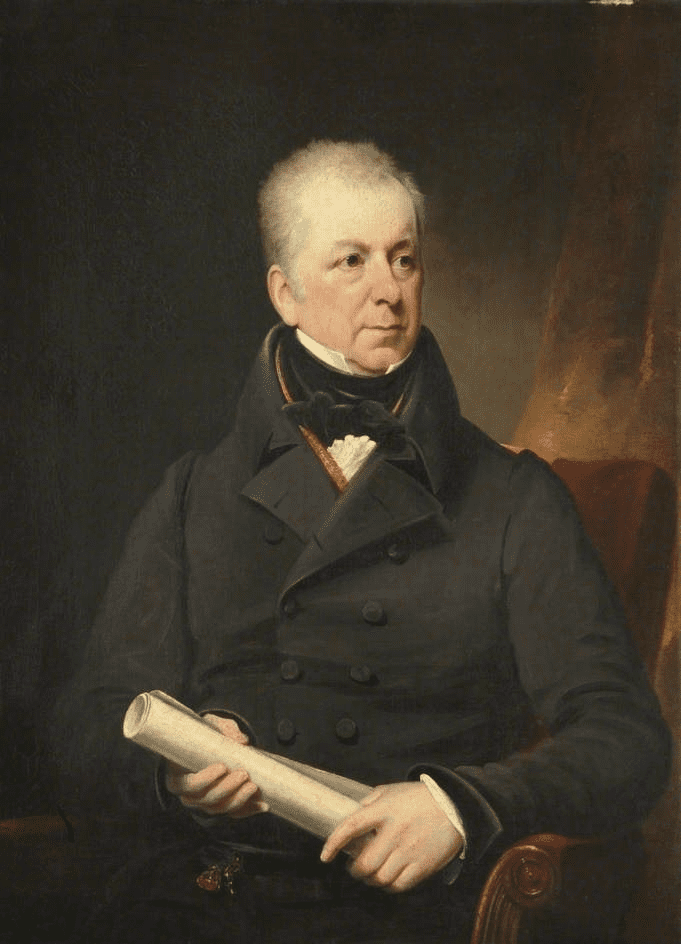
One of the most active abolitionists was William Roscoe, one of Liverpool’s most distinguished residents. He was a prominent writer, a champion of freedom, a lawyer, a scholar, a philanthropist, and a true lover of books and education. A man of noble principles, Roscoe had many supporters among those for whom profit was not the ultimate value. For a time, he served as an MP for Liverpool and showed remarkable courage in his opposition to the transatlantic slave trade. In 1807, he voted for the abolition of this ‘business’ and also campaigned against the death penalty. Surprisingly, some individuals who profited from the slave trade financially supported Roscoe.
The Industrial Revolution
The production of various goods developed rapidly in the 18th and 19th centuries. For Liverpool, this was particularly significant as its port became a central hub for transporting goods by sea. Coal, cotton, silk, and sugar all needed not only to be produced but also to be sold, and Liverpool played a crucial role in this process. Some politicians skilfully used this to gain public support.
The Rivalry Between Tories and Whigs
In Liverpool, as in other British cities, there was a fierce rivalry between the Tories and the Whigs, two factions that held significant influence on the political stage from around 1760 to 1830.
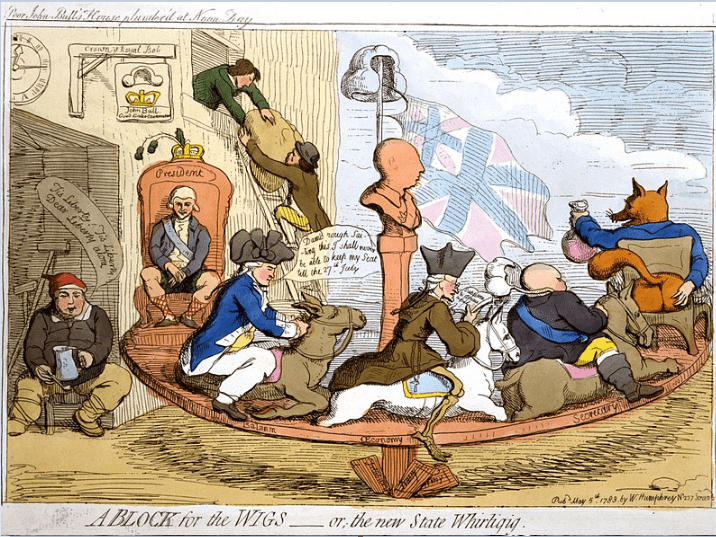
The Tories were also known as the ‘Pinks’ because of the colour of their leaflets and symbols. They were a conservative political force, supporting the monarchy, the Church, and traditional social structures. In contrast, the Whigs, or ‘Greens’, held more progressive views, advocating for reform and the expansion of voting rights. They often represented the interests of industrialists.
In 1812, a political conflict erupted in Liverpool concerning elections and political factions. The anti-Catholic Isaac Gascoyne and a Mr Townshend joined a coalition that included disgruntled ‘Greens’ and wealthy shipowners who had been excluded from the town’s governing body.
This coalition competed against other political forces, particularly the Whigs who supported George Canning. Gascoyne and Townshend secured victory, and this split had a lasting impact on Liverpool’s political landscape.
These factions significantly influenced the political circumstances of the time and spurred the debate and implementation of various reforms in British society. But what were they?
Political Reforms
18th Century. Although an agreement in 1761 stipulated the return of one representative from the ‘corporation’ and one ‘independent’ member, elections were often contentious. Vote-selling became a widespread practice, especially in the municipal elections that were reinstated after a 1791 campaign to introduce open general meetings.
In the 19th century, Liverpool continued to see political reforms. For example, electoral reform and the expansion of citizens’ political rights significantly altered the city’s political atmosphere.
Previously, the working class and certain other sections of the population had no right to vote. However, the reforms extended the franchise and corrected the injustice that made some feel inferior to others. Before these changes, only 8-10 per cent of the population were considered ‘freemen’ and were eligible to vote. Power was held by a mayor and two bailiffs, elected annually by the freemen on 18th October. Those elected were exempt from town (port) duties. Some authority also rested with a self-elected common council of 40 members, which made important decisions and supervised the activities of the local government.
The next major step was the abolition of slavery – a social and political movement aimed at completely ending the slave trade and recognising slavery as an unacceptable social phenomenon. Liverpool played an active part in this noble struggle. Consequently, one of the most important reforms was the passage of the Slavery Abolition Act in 1833. This act led to the complete abolition of slavery throughout the British Empire, a feat that would not have been possible without the contribution of Liverpool’s humanitarian political figures.
Social Reforms
In the second half of the 19th century, social reforms began to be introduced to improve the working and living conditions of labourers. These changes included imposing limits on working hours, improving workplace conditions, and addressing the housing situation in working-class districts.
These reforms had a profound impact on society and the political climate in Liverpool and other cities across Great Britain, fostering the development of democracy and enhancing the quality of life for citizens.