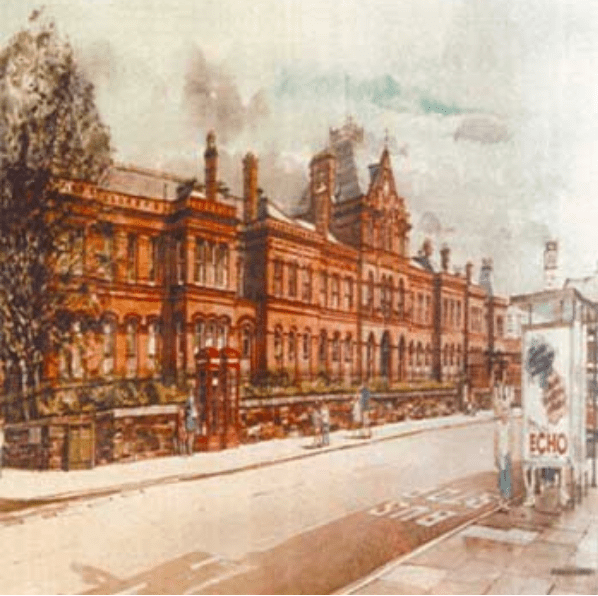

When discussing old tales like those concerning the Stanley and Molyneux families, people often dismiss them as ‘ancient history’ or fiction. While it’s certainly difficult to find verifiable information about the Middle Ages, authoritative documentary sources do confirm these stories. These two families left a deep and lasting imprint on the history and political life of Merseyside, which we will explore in detail on liverpoolyes.com.
When and Where: The Key Details
The period in question spans the years following the terrible plague epidemic in the first half of the 14th century up to the start of the Tudor dynasty. That is, roughly 1350–1500, a period encompassing both the Hundred Years’ War and the Wars of the Roses.
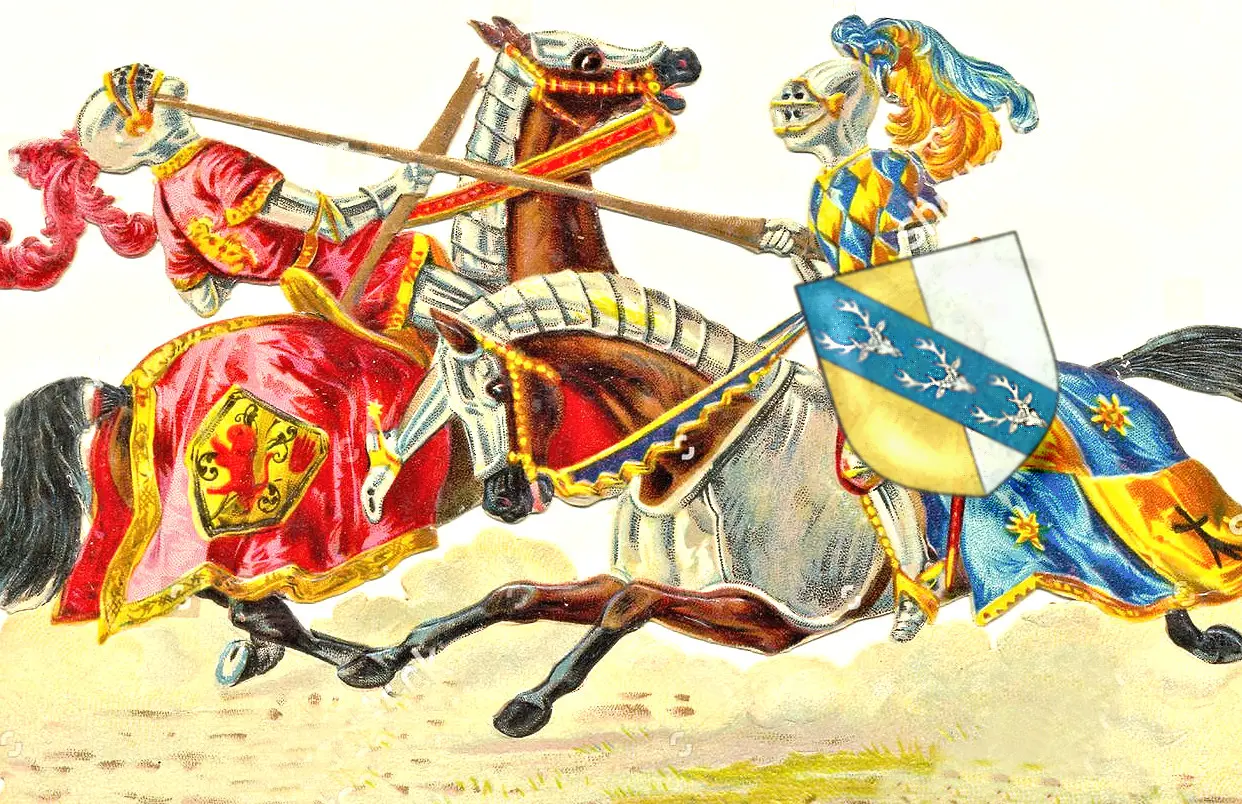
Throughout this era, two wealthy families, the Stanleys and the Molyneuxs, effectively controlled the Merseyside area. At times they engaged in brutal feuds, and at others, they united their forces to oppose the French. The legacy of these families lives on today in many Liverpool place names, buildings, and symbols.
The Stanley Family
The plague hit Liverpool hard, wiping out a quarter of the town’s population. The late 1300s and early 1400s saw the town enter a period of lawlessness and destitution.
The Stanley family was descended from Norman nobility and held sway on the Isle of Man. The Lathom family was also influential in the area, owning lands since the Norman conquest. They held the majority of the territory that makes up modern-day Knowsley.
At a jousting tournament hosted by King Edward III, John Stanley met Isabel Lathom. There, he emerged victorious over the French Admiral Hainaut, a man who had a reputation for striking fear into his enemies. John proved stronger this time, and the King subsequently knighted him. Soon after, Stanley married Isabel, inheriting her lands and wealth.
The Molyneux Family
Like many wealthy medieval noblemen, the Molyneuxs traced their origins to a knight who arrived during the Norman Conquest. The Molyneux family were descendants of William de Moulins, who hailed from the town of Moulins in Normandy, France.
The family settled in Lunt, a town that belonged to the Sefton wapentake (county subdivision). They owned a hall there, close to the present-day St Helen’s Church, and controlled the majority of the Sefton area.
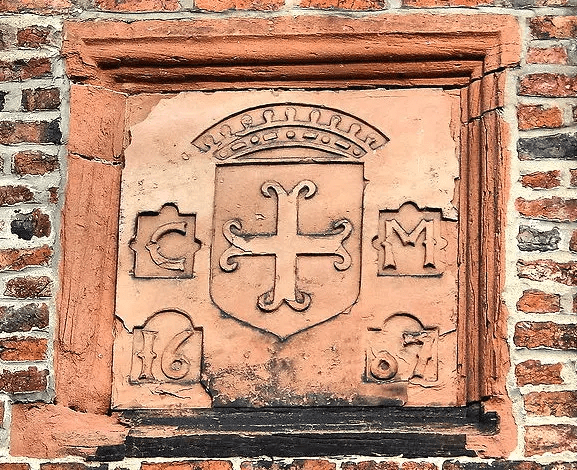
In 1575, representatives of the Molyneux family moved to Croxteth Hall in West Derby, where Norman knights had settled 500 years earlier. Their family crest was the Molyneux Cross, which is still used by Sefton Council and at Croxteth Hall Country Park.
Who Was Who
In 1485, Lord Stanley was granted the title of Earl of Derby (we’ll explain how later). From that time on, the family wielded significant influence in regional and national politics. They were true magnates and respected landowners.
Interestingly, William Roscoe, a prominent Liverpool patron of the arts, maintained relations with the Stanley family. Roscoe made an important contribution to the anti-slavery campaign and was actively involved in Liverpool’s public life.
It is also worth mentioning Elizabeth Stanley, born around 1423, the daughter of Sir Thomas Stanley, Lord Lieutenant of Ireland. Elizabeth married Richard Molyneux, the Chief Forester of West Derby, and became the mother of several children. Among them were Sir Thomas Molyneux, who died in 1483, and Margaret, who married John Dutton and founded the choir at Sefton Church. Her family held important positions in society and influenced local politics at the time.
The Clan Wars
Now, let’s turn to the main event of our story: the fight for political influence—as it was before democratic (though sometimes dishonest) elections were introduced.
Oskatel Left Without an Inheritance
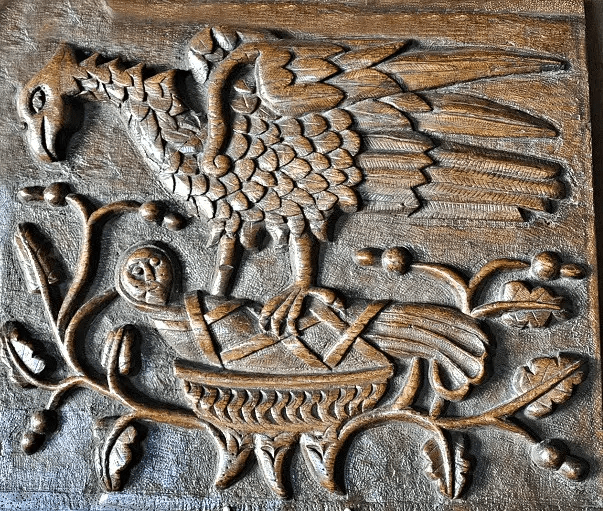
This tale begins with Sir Thomas Lathom, Isabel’s father, finding a child in the woods beneath an eagle’s nest. It was a boy he named ‘Oskatel,’ meaning ‘foundling’ or ‘abandoned child’—a term for a child who was found and had no parents. It’s plausible that this ancient word has Slavic roots (‘iskati’—to seek).
Oskatel became Sir Thomas’s adopted son and was poised to inherit the Lathom family fortune. However, Sir Thomas had his own ideas about the distribution of his estate and decided to give the majority of his lands to his daughter Isabel, rather than the ‘eagle child.’ Thus, the Lathom fortune passed to the Stanleys, as John married Isabel. This famous Liverpool legend is even immortalised in the names of some local pubs.
Now the Stanley family had to protect their inheritance, so in 1406 they built the Liverpool Tower — a huge fort located on modern-day Water Street, very close to Liverpool Castle. It provided the Stanleys with protection for their sea voyages to the Isle of Man.
The Attack on Liverpool Tower
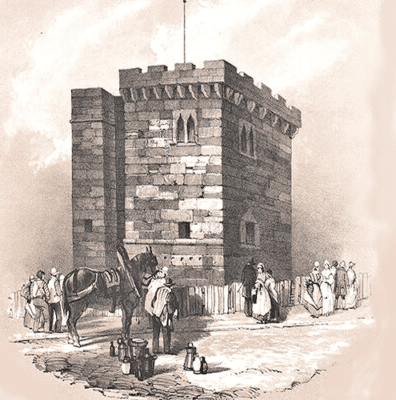
In 1421, the King allowed Richard Molyneux and his soldiers to live in Liverpool Castle. It was separated from the Stanley family’s tower by little more than an arrow’s flight.
In 1424, a fierce feud erupted between Thomas Stanley and Sir Richard Molyneux. Richard marched on Stanley’s tower with a thousand warriors ready for battle. Their opponents, who were twice as numerous, waited inside the tower. It was then that someone summoned the sheriff. Later, the feuding factions were served with a royal command—issued by Henry VI—to stand down.
The rivalry was soon brought to an end, and a civil war did not erupt then, though there was every chance it would. The sons and grandsons of the two families went on to intermarry and live long and happy lives.
The Fight Against the French
The French and English rulers had been closely connected since 1066. They constantly fought over who was worthy to rule the territory of modern France. The two nations actively pursued this rivalry after the death of the French King Charles IV, who died without a male heir.
This sparked the Hundred Years’ War—or rather, a series of separate battles—that lasted from 1337 to 1453. The English won most of the engagements and even controlled about half of France for a time, but ultimately lost it. Historians attribute the English victories to the skilful use of the longbow, which proved decisive. The French had the longbow in their arsenal, but it took longer to reload and did not achieve the same range.
It was the fight against the French that temporarily united the Molyneux and Stanley families. A very important battle occurred even before the clash described above, at Agincourt in 1415. There, the English King Henry V commanded 6,000 longbowmen against an enemy army of 30,000, many of whom were mounted knights.
The battlefield was essentially a swamp, and the French knights wore very heavy armour that hampered their movement. Stuck in one spot, they allowed themselves to be decimated by the English archers. Following the English victory, King Henry V knighted both heroes of the battle. Richard Molyneux was rewarded with the deer parks of Croxteth and Toxteth.
The Wars of the Roses
This power struggle involved the Lancastrians and the Yorkists, whose symbols were the red and white roses, respectively. The conflict between the Lancastrians and Yorkists began due to the mental illness of the Lancastrian King Henry VI, which led to the loss of French territories after the Hundred Years’ War. As a result, the crown passed back and forth between the two houses several times.
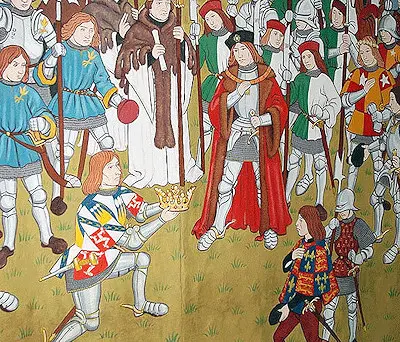
In 1483, the crown was supposed to pass to the young Prince Edward V, but his uncle Richard, having gained control of the Tower of London by appointing Thomas Stanley as its Constable, treacherously eliminated the princes and made himself King Richard III. The conflict concluded with the Battle of Bosworth Field, where Stanley betrayed Richard and supported Henry Tudor. After the victory, Tudor became king, founding the Tudor dynasty, and Stanley, in gratitude, received the title Earl of Derby.